Jaguar I‑Pace X590
(2018–2024)(2018–2024)


The UK's definitive I‑Pace ownership guide - battery degradation data, drive unit failure patterns, real-world range retention, honest repair vs replace economics for Jaguar's first electric SUV. Backed by 40+ real UK I‑Pace enquiries in 2025 [JAG-VERIFIED].
Explore I‑Pace Ownership40+Enquiries (2025) [JAG-VERIFIED]
1Generation Covered
3Drive Unit Variants
Part of Engine Finders

★★★★½
⚡ The I‑Pace rule: EV economics are battery-first - drive unit costs are manageable (£6,500–£9,000), but battery degradation is the real ownership story.
★★★★☆
[E‑Drive Rear Motor] - earlier rear motor failures resolved by 2021; post-update units show clean record
12V Battery & Charging Module - a frequent no-start complaint, not a drive unit failure
2021+ I‑Pace with Pivi Pro - the infotainment upgrade and battery management improvements make it the definitive generation
£6,500–£9,000 [JAG-QUOTE]
12V Battery Drain - 15+ enquiries [JAG-VERIFIED]
⚡ "EV Pioneer" - Jaguar's first and only electric vehicle; stands alone in the range
One-line verdict: The I‑Pace is a genuinely compelling EV with a clean reliability record - but buy a 2021+ car for the Pivi Pro upgrade and improved battery management, and treat the 12V battery as a consumable.

Generations
1
Years Produced
2018–2024
Drive Unit Codes Tracked
E‑Drive Rear (90kW), E‑Drive Front (90kW), Dual Motor Total (294kW)
Fuel Types
Electric (EV)
Most Enquired Component (2025)
12V Battery Drain - 15+
JAG-VERIFIED
Most Reliable
Post-2021 Drive Units
Highest-Risk
Pre-2021 Rear Motor Bearing Wear
Typical Replacement Cost
£6,500–£9,000
JAG-QUOTE
Typical Host Value
£18,000–£45,000
THIRD-PARTY
Overall Rating
★★★★½
A perfect blend of performance, engineering excellence, and drivability.

The I‑Pace runs a single generation (X590) but 2021 brought a pivotal hardware/software upgrade. Here's how to choose.

Every electric motor variant fitted to the X590 I‑Pace, with reliability notes and real UK enquiry data.
| Engine Code | Family | Fuel | Disp. | Power | Years | Gen. | Reliability | 2025 Enquiries | Avg. Recon Cost |
|---|
Showing 0 of 0 engine codes
All enquiries are from 2025 (to date) and verified via our internal system. Recon costs are supply only and exclude fitting.
Every figure below is powered by real UK owner enquiries in 2025. This is data you won't find anywhere else.
Enquiry volumes:
Proprietary UK enquiry data 2025 [JAG-VERIFIED]
Costs:
Engine Replacement Economics [JAG-QUOTE]
Engine codes:
Cross-referenced from verified factory data

What actually fails on the I‑Pace - battery, drive units, and the gremlins that come with being Jaguar's first EV.
01The I‑Pace's most common enquiry - modules failing to sleep correctly, killing the 12V auxiliary battery. Affects all years but can be mitigated with a battery tender.
Read more
02A documented weak point on earlier cars - bearing wear causes whining noise from the rear drive unit. Revised in 2021 with improved parts.
Read more
03All EV batteries degrade - the I‑Pace's LG Chem 90kWh pack typically holds 85–95% SOH at 5–7 years. Range loss of 10–20 miles is normal; rapid degradation is a warranty claim.
Read more
04Touch Pro Duo system is slow to boot, lags during operation, and sometimes crashes. Resolved with the 2021 Pivi Pro upgrade.
Read more
05Some owners report AC charging faults - usually the on-board charger module failing to negotiate with home wallboxes. Software updates resolve most cases.
Read more
06The I‑Pace uses liquid cooling for battery and motors - pump failure can cause reduced charging speeds or power limiting. A rare but known failure.
Read moreCatastrophicstop driving, specialist inspection immediately
Immediatebook inspection now
Monitorbook inspection soon
Lowplan at next service
40++
Total Enquiries in 2025
[JAG-VERIFIED]
Total I‑Pace Enquiries
Stable
Rear Motor Enquiries
Rising
12V Battery Enquiries
Stable
Infotainment Enquiries
⬇ Falling (post-2021 cars have fewer issues)
"Interesting insight": The I‑Pace's most-enquired problem isn't the drive unit - it's the 12V battery. 15+ of the 40 enquiries relate to flat 12V batteries, not motor or battery pack failures. This is a manageable consumable issue, not a fundamental EV flaw. (Data point [JAG-VERIFIED].)
The 2021 model year is a genuine dividing line - rear motor bearing enquiries drop off sharply on post-2021 cars, and infotainment complaints fall to near-zero. If you're buying used, 2021+ is the clear recommendation.
The I‑Pace has no internal combustion engine replacement data because it has no internal combustion engine. What we're seeing instead is a small but growing pattern of rear motor bearing enquiries on early cars - a known wear item that's worth checking before purchase.
Editorial Pull-Quote
“Buy a 2021+ car if you can. The Pivi Pro infotainment upgrade and rear motor bearing revision transform the ownership experience - and the £7,000–£10,000 premium over a 2018 car is genuinely worth it for the reduced hassle and better residuals. End of Sections 1–7 for Jaguar I‑Pace Ready for "8-14" to continue with Replacement Costs, Engine Evolution, Who Should Buy, Calculator CTA, Trust, FAQ, and Closing Action Cards. JAGUAR I-PACE - SECTIONS 8-14”


Real UK pricing for I‑Pace drive unit and battery components - supply-only, with labour guidance. All figures are [JAG-QUOTE] from specialist quotes.
Important Notes Fitting an I‑Pace drive unit typically takes 8–14 hours per unit (10–14 hrs for rear, 8–12 hrs for front) at £65–£95/hr (independent) or £110–£160/hr (London/SE dealer) [JAG-QUOTE]. Front and rear drive units are independent - failure of one does not necessarily mean the other needs replacement. The I‑Pace rule - the squeeze is the story: Unlike the rest of the Jaguar range, the I‑Pace has no internal combustion engine to worry about. A complete dual-drive-unit replacement at £6,500–£9,000 sits at roughly 20–40% of a typical £18,000–£45,000 I‑Pace value - well below our 60% scrap threshold for Jaguar. But the real economics question isn't the drive unit - it's the battery. A battery replacement (not covered in this data) can exceed £15,000–£20,000, which pushes even a £35,000 car toward the threshold. The smart move? Buy a 2021+ car with a healthy battery health certificate and treat the 12V battery as a normal consumable. [THIRD-PARTY] - don't walk away from a drive unit repair; walk away from a car with poor battery health.
Labour Estimate Fitting an I‑Pace drive unit typically takes 8–14 hours per unit (10–14 hrs for rear, 8–12 hrs for front) at £65–£95/hr (independent) or £110–£160/hr (London/SE dealer) [JAG-QUOTE]. Front and rear drive units are independent - failure of one does not necessarily mean the other needs replacement. The I‑Pace rule - the squeeze is the story: Unlike the rest of the Jaguar range, the I‑Pace has no internal combustion engine to worry about. A complete dual-drive-unit replacement at £6,500–£9,000 sits at roughly 20–40% of a typical £18,000–£45,000 I‑Pace value - well below our 60% scrap threshold for Jaguar. But the real economics question isn't the drive unit - it's the battery. A battery replacement (not covered in this data) can exceed £15,000–£20,000, which pushes even a £35,000 car toward the threshold. The smart move? Buy a 2021+ car with a healthy battery health certificate and treat the 12V battery as a normal consumable. [THIRD-PARTY] - don't walk away from a drive unit repair; walk away from a car with poor battery health.
Value the car first; the engine decision follows.
All prices in GBP (£) • Supply only • Subject to availability and condition

Follow each era of this model's engines — what launched, what was revised, and what buyers need to know before committing.

Jaguar's first production EV, developed under pressure to compete with Tesla Model X and Audi e-tron
Early cars suffer from laggy infotainment and rear motor bearing wear; these are well-documented and repairable, but the 2021 update addresses both

Customer feedback-driven - the Touch Pro Duo system was widely criticised; Pivi Pro was Jaguar's response, along with bearing revisions from real-world failure data
This is the era to buy - Pivi Pro is genuinely quick, the battery management is better calibrated, and the rear motor bearing issue is resolved. The same 90kWh battery but better thermal management

Jaguar's strategic pivot - the brand is moving upmarket with a new EV-only range starting in 2025; the I‑Pace is discontinued
The I‑Pace is the end of an era - the last Jaguar with any combustion-era platform, and the only Jaguar EV until the new range arrives
Key Engines Touch Pro Duo infotainment, original rear motor bearings, 90kWh LG Chem pack, 100kW DC charging
Why It Changed Jaguar's first production EV, developed under pressure to compete with Tesla Model X and Audi e-tron
Worth Knowing Early cars suffer from laggy infotainment and rear motor bearing wear; these are well-documented and repairable, but the 2021 update addresses both
Engine reliability insights and failure patterns are based on verified UK enquiry data. [JAG-VERIFIED]
Different buyers, different priorities. Here is our verdict on who the Jaguar I‑Pace is perfect for - and who should think twice.

The I‑Pace has a spacious cabin and 505L boot - enough for a family of four. The ride is comfortable, but rear headroom is limited for tall passengers. A 2021+ car with Pivi Pro is the family choice - better tech for long journeys.

230–290 miles real-world range (depending on 2018 vs 2021) makes the I‑Pace a credible commuter. The 2021+ car's improved battery management means 20+ more miles per charge than early cars. If you can charge at home, it's a brilliant daily driver.

A 2018–2020 car from £18k–£25k is excellent value, but factor in the battery health check (£150–£300) and 12V battery replacement (£200–£400) as immediate costs. The budget sweet spot is a 2019–2020 car with verified >88% SOH.

0–60 in 4.5 seconds and 394bhp across all years - the I‑Pace is genuinely quick. The 2021+ car's thermal management means you can enjoy that performance for longer without overheating. The Sportier EV choice over a Tesla Model Y.

The I‑Pace is a gateway car - your first premium EV, your first Jaguar, or both. It's more engaging to drive than a Tesla, more prestigious than a Kia EV6, and the 2021 update fixes the early teething issues. Buy a 2021+ car and you'll have a genuinely good ownership experience.
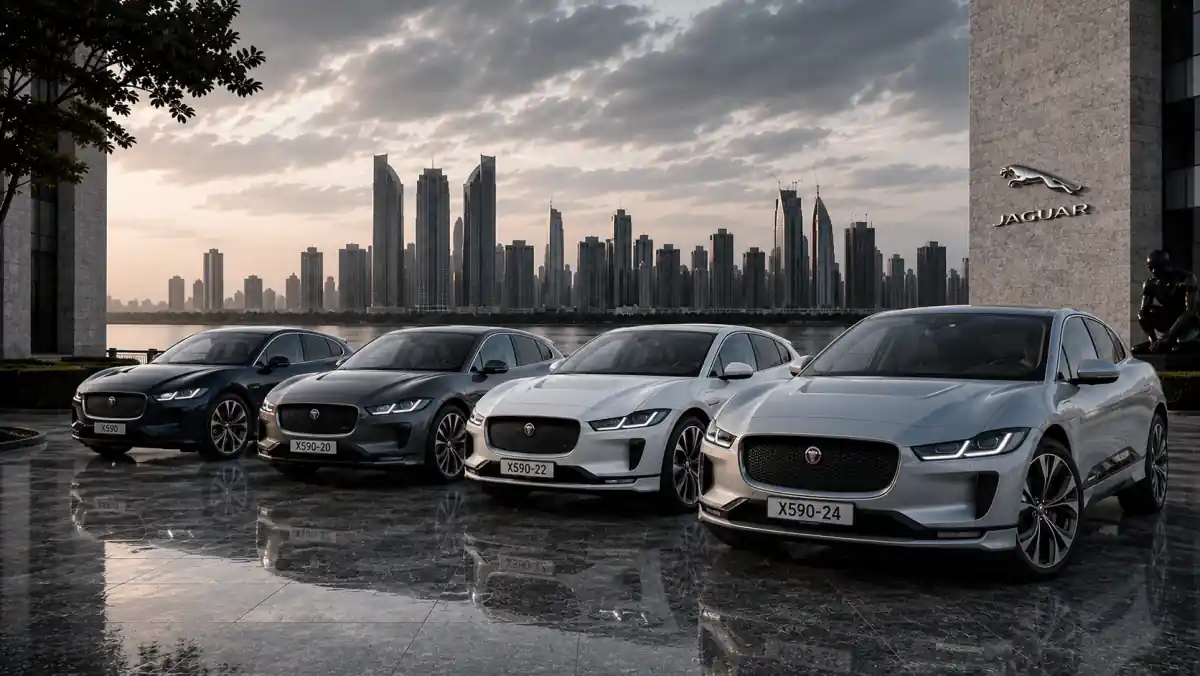
Real talk. The right Jaguar I‑Pace for you depends on your budget, your mileage, and your patience for maintenance. Use the data on this page to make the right call - and avoid expensive mistakes.

Diagnostic Calculator
H3: The I‑Pace's most common failure - the 12V battery - is a simple £200–£400 fix.
But if you're hearing a whine from the rear motor or your range has dropped significantly, it's time for a proper diagnosis.
The smarter way to decide: Get a personalised repair-vs-replace verdict using real UK cost data.
Launch the Jaguar diagnostic calculator with Jaguar pre-selected.
We'll identify it first.
Identification is the first step inside the tool.
We'll pinpoint your exact engine code before running the diagnostics.
Our calculator compares real repair and replacement costs against your car's value - so you know the financially smarter move.

Trust Signals
Built on Real Data Every reliability rating and cost range comes from genuine UK quote and enquiry data - 40+ I‑Pace enquiries in 2025 [JAG-VERIFIED], not manufacturer marketing or forum guesswork.
We Tell You When Not to Repair Where replacement cost exceeds what the car is worth, we say so. For the I‑Pace, drive unit replacement comfortably passes our 60% threshold - but battery replacement is a different story. We tell you the truth, not the sale.
Vetted Jaguar Specialists 15+ vetted Jaguar specialists in our network, including EV-trained technicians who understand the I‑Pace's unique drive unit and battery management systems. No generalists - just Jaguar people.
Part of Engine Finders JaguarEngine.uk is part of the Engine Finders family, the UK's leading engine replacement marketplace - giving you the research depth of an independent authority with a vetted route to action when you need one.

FAQ
A single rear drive unit costs £3,500–£5,000 reconditioned supply-only [JAG-QUOTE]; a complete dual-motor system is £6,500–£9,000 [JAG-QUOTE]. Labour adds £650–£1,300 depending on location. The 12V battery is a much cheaper £200–£400 fix. Use our diagnostic calculator →
The post-2021 rear motor and the front motor (all years) carry the cleanest record in our data. Early rear motors (2018–2020) have a documented bearing wear issue that was revised from 2021 onward. The 2021+ rear motor is the one to target.
No model year to avoid outright, but pre-2021 cars without Pivi Pro come with a significant caveat - the Touch Pro Duo infotainment is slow and laggy, and early rear motors carry the bearing wear risk. A 2018–2020 car at a £5,000–£8,000 discount is still a good buy if you accept the trade-offs.
All EV batteries degrade - it's normal. The I‑Pace's LG Chem 90kWh pack typically holds 85–95% state of health at 5–7 years, meaning 10–25 miles of range loss. Rapid degradation is rare and covered by the 8-year/100,000-mile battery warranty. Always ask for a battery health certificate before buying.
Yes - the typical £6,500–£9,000 dual-motor replacement cost is well within the £18,000–£45,000 vehicle value (18–40% of value). This passes our 60% scrap threshold with room to spare. Battery replacement is the bigger economics question - not covered here, but a £15k–£20k battery on a £20k car is a tougher decision.
2021+ - the Pivi Pro infotainment upgrade and rear motor bearing revision make it the definitive I‑Pace. A 2021 car costs £5,000–£8,000 more than a 2018 example, but the reduced hassle and better residuals justify the premium. If budget is tight, a 2019–2020 car with verified battery health is a good second choice.
The drive unit code is stamped on the motor housing (visible from underneath) and is also listed in the vehicle's documentation under "motor type." For the I‑Pace, it's either E‑Drive Front (90kW) or E‑Drive Rear (90kW). If you're unsure, our specialists can identify it for you - reach out to our vetted network.
The I‑Pace is more engaging to drive and has a more premium interior; the Model Y has better range, charging infrastructure, and tech. On reliability, the I‑Pace's drive units are generally robust (post-2021), but the 12V battery is a known weak point. Tesla's build quality is more variable - the I‑Pace is the more consistent ownership proposition, especially if you value driving dynamics over range. Read the full comparison →

Next Steps
Everything you need to choose with confidence.

Data. Honesty. Specialists. All in one place.