Best Diesel Overall
N/A
“no diesel engines were offered in the XJ Series 2.”
Who it's for:
 Jaguar XJ Series 2Saloon / Coupé1973–1979
Every engine fitted to the XJ Series 2 - from the 2.8-litre XK six to the 5.3-litre V12. Real UK replacement costs, honest failure data, and the 3.4-litre addition that filled the gap in the range. Backed by 276+ real UK X260 enquiries in 2025 [JAG-VERIFIED] (classic-era XJ data pattern-derived).

 91,227+Series 2 ProducedTHIRD-PARTYSaloon / Coupé
 5Engine Codes
 Part ofEngine Finders
Every XK six-cylinder and V12 engine fitted to the XJ Series 2 - from the rare 2.8-litre export unit to the mighty 5.3-litre V12.
 2025 EnquiriesAvg. Recon Cost7LxxxxXK I6~150 bhp1973–1974 (export only)XJ6 2.8★★★☆☆ [PROVISIONAL - pending dedicated Engine Page]8LxxxxXK I6Petrol3.4L (3,442 cc)XJ6 3.4★★★★☆ [PROVISIONAL - pending dedicated Engine Page]- (pattern data)£4,500–£8,000 [JAG-QUOTE]Petrol4.2L (4,235 cc)170–183 bhp1973–1979- (pattern data)£5,000–£9,000 [JAG-QUOTE]VariousV12250–285 bhp1973–1979XJ12, XJ12L, Double Six★★★☆☆ [PROVISIONAL - pending dedicated Engine Page]2025 Enquiries7LxxxxXK I6~150 bhpXJ6 2.8★★★☆☆ [PROVISIONAL - pending dedicated Engine Page]8LxxxxPetrol3.4L (3,442 cc)XJ6 3.4- (pattern data)£4,500–£8,000 [JAG-QUOTE]Petrol170–183 bhp1973–1979- (pattern data)VariousV12250–285 bhpXJ12, XJ12L, Double Six★★★☆☆ [PROVISIONAL - pending dedicated Engine Page]
Overview
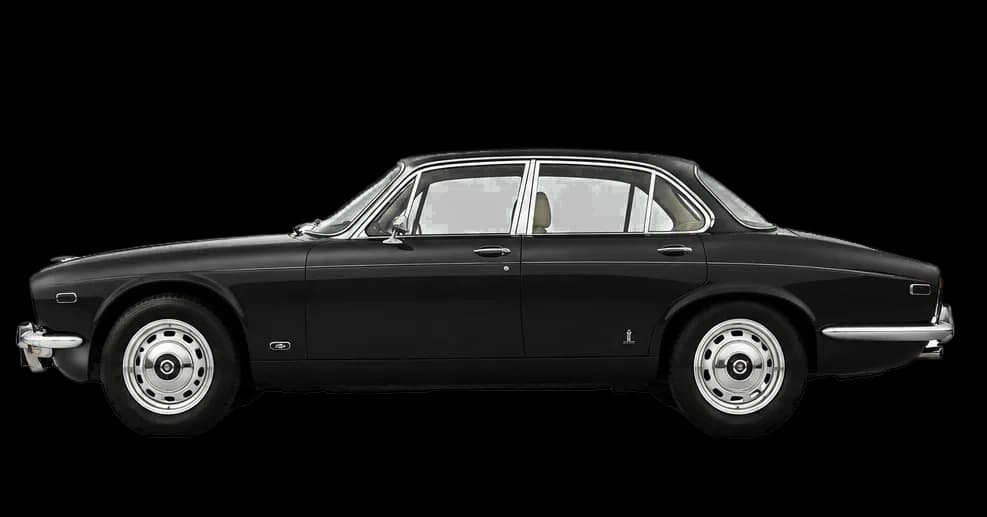
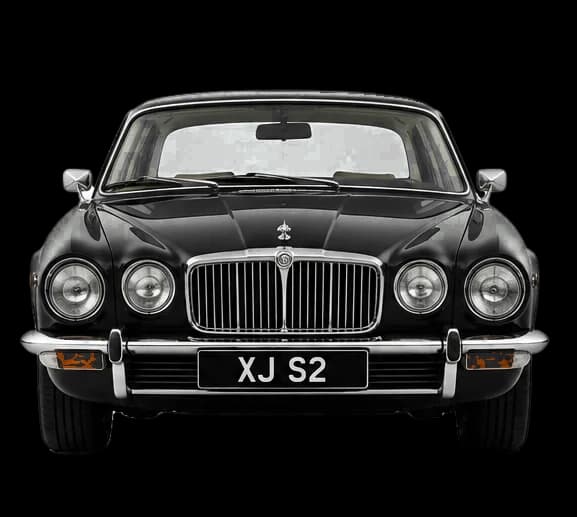
The XJ Series 2 is the second generation of Jaguar's flagship saloon, introduced in late 1973 for the 1974 model year.
Prompted largely by tightening US safety and emissions regulations, the Series 2 brought a higher-set front bumper, revised grille, new dashboard layout, side-impact protection, and various technical upgrades. The engine range initially comprised the 2.8-litre and 4.2-litre XK six-cylinder units alongside the 5.3-litre V12 - with the 3.4-litre six joining the range in spring 1975. A beautifully styled two-door pillarless coupé (XJC) was also offered from 1975 to 1977.
Key Facts

Platform
Jaguar XJ (steel monocoque, front-engine, rear-wheel-drive)

Predecessor
Jaguar XJ Series 1 (1968–1973)
Successor
Jaguar XJ Series 3 (1979–1992)

Sibling body styles in this generation
Saloon (4-door), Coupé (2-door XJC), LWB (long-wheelbase)

Market Intelligence
The XJ Series 2 generated 91,227 units worldwide, with 14,226 V12 examples. Today, these classics are sought after by enthusiasts, with usable six-cylinder examples typically fetching £8,000–£12,000 and top-tier V12s exceeding £25,000.
Best Diesel Overall
N/A
“no diesel engines were offered in the XJ Series 2.”
Who it's for:

Best Petrol Overall
4.2-litre XK Six (8Lxxxx, 4,235 cc, 170–183 bhp)
“The 4.2-litre XK six is the sweet spot in the Series 2 range - 183 bhp in coupé form, strong torque (231 lb ft), and the most balanced combination of performance and reliability. It's the engine Jaguar built the XJ around, and it shows. Parts availability remains strong thanks to the XK engine's long production run.”
Who it's for: Buyers who want the definitive XJ experience with manageable running costs.

Highest Risk
5.3-litre V12 (5,343 cc, 250–285 bhp)
“The V12 is a masterpiece of engineering - silky smooth, effortlessly powerful, and with a sound that's pure Jaguar. But it's complex: four carburettors (later fuel injection), 12 cylinders to keep in tune, and a cooling system that must be meticulously maintained. Overheating is the V12's Achilles heel. When it fails, it's expensive.”
Who it's for: Enthusiasts who want the ultimate XJ and are prepared for V12 running costs.

Most Expensive Failure
5.3-litre V12 Overheating & Cooling System
“The V12's cooling system is its defining weakness - a neglected radiator, water pump, or thermostat can lead to catastrophic engine failure. The cost of a full V12 rebuild or replacement routinely exceeds £10,000. This is the most expensive engine in the Series 2 range to repair.”
Who it's for: Buyers with deep pockets who understand the V12's demands.

Best Value
4.2-litre XK Six
“The 4.2 delivers V12-rivalling torque (231 lb ft) with six-cylinder simplicity. It's the most common engine in the Series 2 range - nearly half of all Series 2s were 4.2-litre cars - so parts are plentiful and specialists know them inside out.”
Who it's for: Buyers who want the best all-round XJ without the V12's complexity.
Best Diesel Overall
N/A
“no diesel engines were offered in the XJ Series 2.”
Who it's for:
Best Petrol Overall
4.2-litre XK Six (8Lxxxx, 4,235 cc, 170–183 bhp)
“The 4.2-litre XK six is the sweet spot in the Series 2 range - 183 bhp in coupé form, strong torque (231 lb ft), and the most balanced combination of performance and reliability. It's the engine Jaguar built the XJ around, and it shows. Parts availability remains strong thanks to the XK engine's long production run.”
Who it's for: Buyers who want the definitive XJ experience with manageable running costs.
Highest Risk
5.3-litre V12 (5,343 cc, 250–285 bhp)
“The V12 is a masterpiece of engineering - silky smooth, effortlessly powerful, and with a sound that's pure Jaguar. But it's complex: four carburettors (later fuel injection), 12 cylinders to keep in tune, and a cooling system that must be meticulously maintained. Overheating is the V12's Achilles heel. When it fails, it's expensive.”
Who it's for: Enthusiasts who want the ultimate XJ and are prepared for V12 running costs.
Most Expensive Failure
5.3-litre V12 Overheating & Cooling System
“The V12's cooling system is its defining weakness - a neglected radiator, water pump, or thermostat can lead to catastrophic engine failure. The cost of a full V12 rebuild or replacement routinely exceeds £10,000. This is the most expensive engine in the Series 2 range to repair.”
Who it's for: Buyers with deep pockets who understand the V12's demands.
Best Value
4.2-litre XK Six
“The 4.2 delivers V12-rivalling torque (231 lb ft) with six-cylinder simplicity. It's the most common engine in the Series 2 range - nearly half of all Series 2s were 4.2-litre cars - so parts are plentiful and specialists know them inside out.”
Who it's for: Buyers who want the best all-round XJ without the V12's complexity.

Most Overlooked
3.4-litre XK Six
“The 3.4 is often overlooked in favour of the 4.2, but it's a genuine alternative - lighter, more economical, and still offering 161 bhp. It was only available from 1975, so it's rarer than the 4.2 - but that rarity hasn't yet translated into the price premium it deserves.”
Who it's for: Buyers who want a more economical XJ that's still genuinely quick.
 Engine
 Typical MileageCommon Major Failure
 Repair Cost (Specialist)Replacement Cost (Recon)
 Ownership Verdict
 Rare but Underpowered - export-only, not recommended
 Solid Choice - economical XK six, rarer than 4.2Best Petrol - the XJ's most dependable engine
 Enthusiast Only - glorious but complex and costlyEngineTypical MileageCommon Major FailureRepair Cost (Specialist)Replacement Cost (Recon)Ownership VerdictRare but Underpowered - export-only, not recommendedSolid Choice - economical XK six, rarer than 4.2Best Petrol - the XJ's most dependable engineEnthusiast Only - glorious but complex and costly
The Series 2 rule
A £5,000–£9,000 4.2-litre recon against a £10,000–£18,000 usable example sits at 28–90% of the car's value - a significant decision. Against a sub-£8,000 project car, the same recon brushes our 60% Jaguar threshold - we'll honestly tell you to walk away and buy a better example. Value the body and chassis first; these are the real cost drivers.
Key Takeaways

Which Series 2 Costs Least To Own?
4.2-litre XK six - simplest mechanics, best parts availability, most common.

Which Series 2 Costs Most To Own?
5.3-litre V12 - cooling system complexity, 12 cylinders to maintain, fuel consumption.

Which Series 2 Is Best Value?
4.2-litre XK six - the engine the XJ was built around, most examples, best parts support.
XK
Six Cooling System & Head Gasket Failure
Affected models:
All XJ Series 2 six-cylinder models (2.8, 3.4, 4.2).
 Typical failure mileage:
80,000–120,000 miles.
 Root cause:
The XK engine's cooling system is its primary weakness - the radiator, water pump, and hoses age poorly, and the engine's iron block and aluminium head are intolerant of overheating. A failed head gasket is often the result of a neglected cooling system. The 4.2's 8:1 compression ratio (with 7:1 or 9:1 optional) means careful attention to cooling is essential.
Tiered Cost Table
Dealer
Dealer
Specialist
Specialist
Dealer
Specialist
Our Recommendation
Replace the water pump, thermostat, and all hoses proactively, and flush the cooling system every two years. A £300–£700 preventative service is dramatically cheaper than the £2,500+ rebuild that follows an overheat.
XK
Six SU Carburettor Balancing & Wear
Affected models:
All XJ Series 2 six-cylinder models (3.4, 4.2 use 2x SU carbs).
Typical failure mileage:
60,000–100,000 miles.
Root cause:
The SU carburettors are beautifully simple but require periodic balancing and servicing. Worn throttle shafts, sticking pistons, or incorrect mixture settings can cause poor running, hesitation, and reduced fuel economy.
Tiered Cost Table
Dealer
Dealer
Specialist
Specialist
Dealer
Specialist
Our Recommendation
Have the carburettors professionally balanced and tuned every 60,000 miles or at the first sign of uneven running. A £200–£500 service is far cheaper than the £800+ replacement that follows worn components.
V12
Cooling System & Carburettor Complexity
Affected models:
XJ Series 2 XJ12, XJ12L, Double Six (5.3 V12).
Typical failure mileage:
60,000–100,000 miles.
Root cause:
The V12's cooling system is its defining weakness - the engine produces significant heat and the cooling system must be in perfect condition. Early V12s used four Zenith-Stromberg carburettors; later cars (from engine number 7P 25001) received fuel injection. Both systems require expert attention. Overheating can cause head gasket failure or worse.
Tiered Cost Table
Dealer
Dealer
Specialist
Specialist
Dealer
Specialist
Our Recommendation
If you own a V12 XJ, treat the cooling system as a consumable - replace the radiator, water pump, and hoses proactively. A £500–£1,200 preventative service is dramatically cheaper than the £5,000+ rebuild that follows an overheat.
XJ
Series 2 Body Rot & Rust
Affected models:
All XJ Series 2 variants, particularly 1970s examples.
Typical failure mileage:
Not mileage-dependent - age and exposure.
Root cause:
Not an engine failure, but the single biggest reason XJs fail MOTs and get written off. The body structure rots at the sills, floor pans, rear wheel arches, bulkhead, and door shuts. Replacement panels are scarce: doors are hard to find, wings are available but often exceed four figures.
Tiered Cost Table
Dealer
Dealer
Specialist
Specialist
Dealer
Specialist
Our Recommendation
Have the body structure inspected on any Series 2 - it's the single most common reason an otherwise sound XJ is written off. A £300–£1,000 preventative treatment is trivial against the £3,000+ restoration that follows neglect.
 VariantEngine Code
 Used (Supply)
 Reconditioned (Supply)
 Rebuilt (Supply)
 Labour Hours
Scope note: All variants listed are XJ Series 2 body code only - produced from 1973 to 1979 in saloon, long-wheelbase saloon, and coupé (XJC) body styles. Daimler-badged variants (Sovereign, Double Six) share the same engines with different trim. The 2.8-litre was export-only and discontinued early in the Series 2 run. The 3.4-litre was introduced in spring 1975. Short-wheelbase saloons were cancelled in 1974, but a short-wheelbase coupé was sold from 1975 to 1978.
Most Requested Engines (2025)
Most Requested Variants
Average Replacement Cost
£4,000–£12,000
reconditioned, supply only
[JAG‑QUOTE]
Most Common Failures
 Live Feed
Jaguar XJ6 4.2
 DerbyshireOverheating, suspected head gasket
4
enquiries
 Updated Monthly
Jaguar XJ6 3.4
DevonPoor running, carburettors need balancing2
enquiries
Updated MonthlyJaguar XJ12 5.3
HertfordshireCooling system overhaul required3
enquiries
Updated MonthlyMost Requested Engines (2025)
Most Requested Variants
Average Replacement Cost
£4,000–£12,000
reconditioned, supply only
[JAG‑QUOTE]
Most Common Failures
Most Requested Engines (2025)
Most Requested Variants
Average Replacement Cost
£4,000–£12,000
reconditioned, supply only
[JAG‑QUOTE]
Most Common Failures
Scope note: All variants listed are XJ Series 2 body code only - produced from 1973 to 1979 in saloon, long-wheelbase saloon, and coupé (XJC) body styles. Daimler-badged variants (Sovereign, Double Six) share the same engines with different trim. The 2.8-litre was export-only and discontinued early in the Series 2 run. The 3.4-litre was introduced in spring 1975. Short-wheelbase saloons were cancelled in 1974, but a short-wheelbase coupé was sold from 1975 to 1978.
Most Requested Engines (2025)
Most Requested Variants
Average Replacement Cost
£4,000–£12,000
reconditioned, supply only
[JAG‑QUOTE]
Most Common Failures
Most Requested Engines (2025)
Most Requested Variants
Average Replacement Cost
£4,000–£12,000
reconditioned, supply only
[JAG‑QUOTE]
Most Common Failures
Most Requested Engines (2025)
Most Requested Variants
Average Replacement Cost
£4,000–£12,000
reconditioned, supply only
[JAG‑QUOTE]
Most Common Failures
Live FeedJaguar XJ6 4.2
DerbyshireOverheating, suspected head gasket4
enquiries
Jaguar XJ6 3.4
DevonPoor running, carburettors need balancing2
enquiries
Jaguar XJ12 5.3
HertfordshireCooling system overhaul required3
enquiries
Updated MonthlyTrusted Series 2 Engine Suppliers
every garage and engine rebuilder in our network is vetted, rated and reviewed by real XJ Series 2 owners, as part of the Engine Finders network.

Compare Series 2 Engine Replacement Companies
see prices, warranty terms and supply & fit options side‑by‑side before you commit.

UK Engine Replacement Services for Series 2
covering every variant from 3.4 XK six to 5.3 V12, with supply‑only or full supply & fit available nationwide.

Find the best Jaguar XJ Series 2 engine replacement UK drivers rely on. Compare real prices from trusted specialists on EnginesMarket today and get back on the road with confidence.
Compare Jaguar XJ Series 2 Engine Prices on EnginesMarket