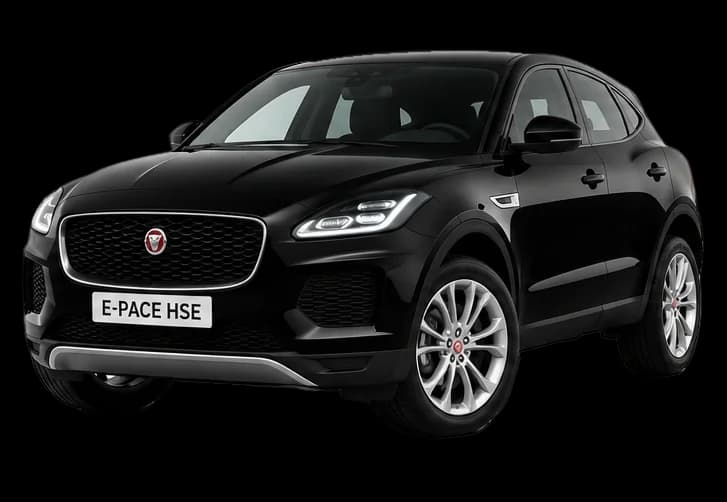
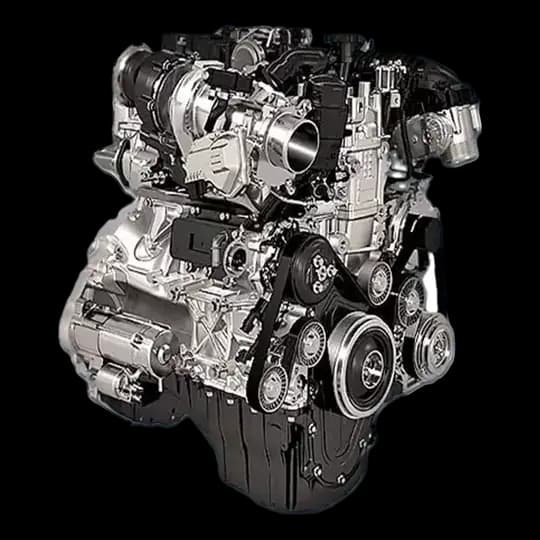
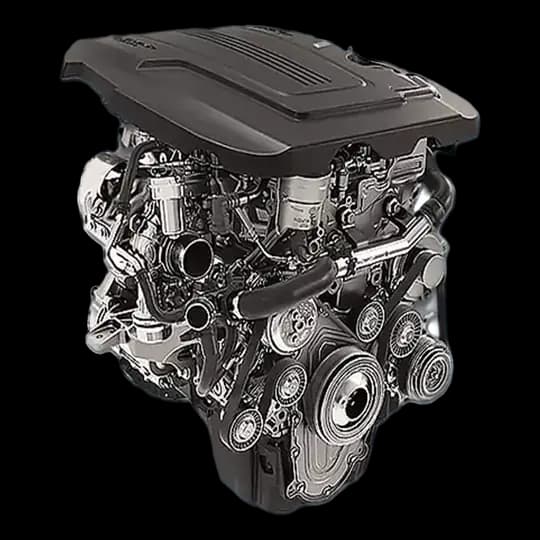
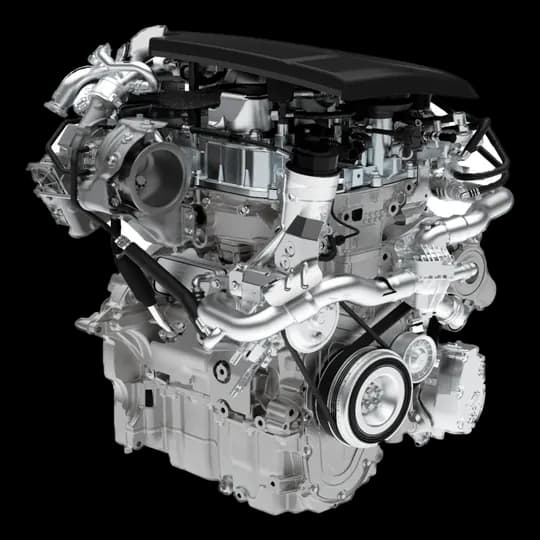
X540
(2017–Present)(2017–Present)


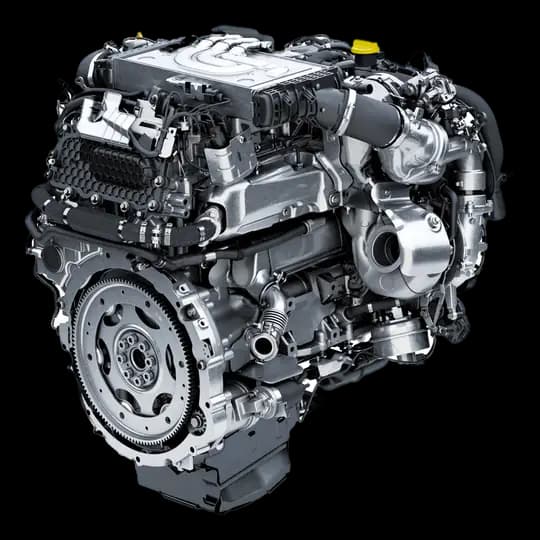
Every E-Pace engine across the X540 generation - Ingenium diesel and petrol, plus the P300e plug-in hybrid. Real UK failure data, honest repair-vs-replace economics for pre- and post-2020 cars, and the one engine you can buy with confidence. Backed by 140+ real UK E-Pace engine enquiries in 2025 [JAG-VERIFIED].
Explore E-Pace Engines140+Enquiries (2025) [JAG-VERIFIED]
1Generation Covered
5Engine Codes
Part of Engine Finders

★★★★☆
✅ Safe - The E-Pace rule: compact SUV values comfortably absorb the modern Ingenium's replacement cost - safe across the board.
★★★★☆
AJ200P / 204PT - Ingenium petrol - water pump replacement is the only meaningful weak point in our data.
AJ200D / 204DTD - pre-2020 Ingenium diesel tensioner wear - same caveat as Land Rover's diesel Ingenium.
2020+ E-Pace with AJ200P / 204PT petrol - post-facelift Ingenium petrol with the revised timing design and no meaningful caveats.
£3,000–£5,800 [JAG-QUOTE]
AJ200D / 204DTD Ingenium Diesel - timing chain tensioner wear (pre-2020) [JAG-VERIFIED]
🚀 High Demand - #6 most-enquired Jaguar model in 2025
One-line verdict: The E-Pace is the Gateway Jaguar - compact SUV values and modern Ingenium engineering make it a genuinely safe used buy, provided you choose the right engine and the right year. The petrol AJ200P has the cleanest record in our data.

Generations
1 (X540)
Years Produced
2017–Present
Engine Codes Tracked
5
Fuel Types
Diesel, Petrol, Petrol PHEV
Most Enquired Engine (2025)
AJ200D / 204DTD Ingenium Diesel
JAG-VERIFIED
Most Reliable
AJ200P / 204PT Ingenium Petrol
Highest-Risk
AJ200D / 204DTD (pre-2020)
Typical Replacement Cost
£3,000–£5,800
JAG-QUOTE
Typical Host Value
£12,000–£30,000
THIRD-PARTY
Overall Rating
★★★★☆
A perfect blend of performance, engineering excellence, and drivability.

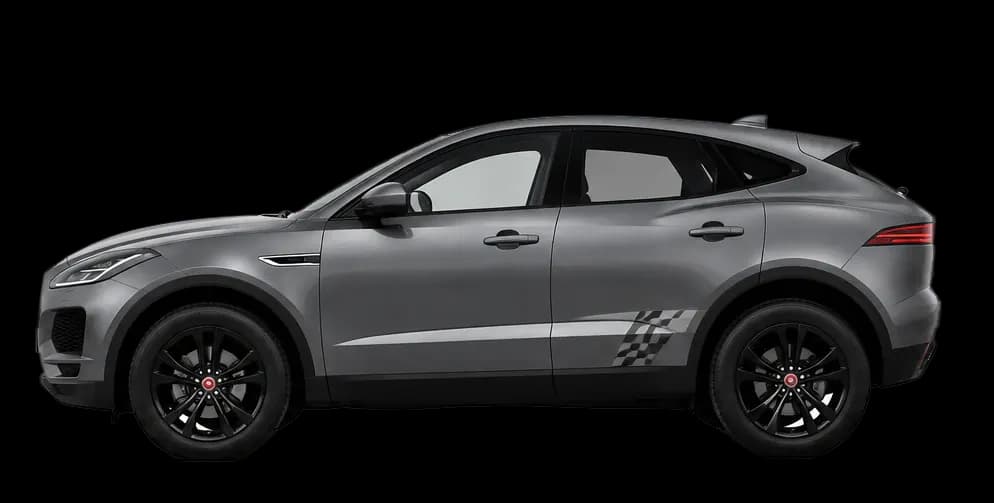
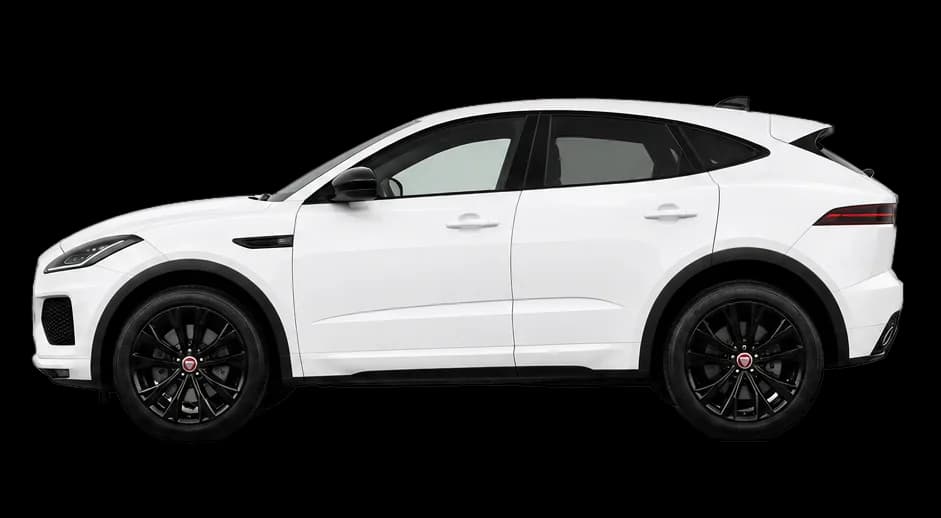
The E-Pace ran from 2017 with a single chassis (X540) but a 2020 facelift that changed the engine lineup - choose pre- or post-2020 wisely.
X540

Comparison sub-block (bolded row-header

Read the full comparison: Pre-Facelift vs Facelift E-Pace

Every engine fitted to the X540 generation - verified factory codes, real UK enquiry data, and honest reliability ratings.
| Engine Code | Family | Fuel | Disp. | Power | Years | Gen. | Reliability | 2025 Enquiries | Avg. Recon Cost |
|---|---|---|---|---|---|---|---|---|---|
| AJ200D / 204DTD | Ingenium Diesel | Diesel | 2.0L | 148–178 bhp | 2017–Present | X540 | ★★★★★ | 140 [JAG-VERIFIED] | £3,500–£5,800 |
| AJ200P / 204PT | Ingenium Petrol | Petrol | 2.0L | 197–247 bhp | 2017–Present | X540 | ★★★★★ | 500 [JAG-VERIFIED] | £3,000–£5,000 |
| AJ20D6 | Ingenium Diesel | Diesel | 2.0L | 201 bhp | 2021–Present | X540 | ★★★★★ | [PATTERN DATA] | |
| AJ20P3 / P300e | Ingenium Petrol PHEV | Petrol PHEV | 2.0L | 296 bhp (combined) | 2020–Present | X540 | ★★★★★ | [PATTERN DATA] | |
| AJ200D (JLR-spec) | Ingenium Diesel | Diesel | 2.0L | 161–178 bhp | 2017–Present | X540 | ★★★★★ | [PATTERN DATA] | £3,500–£5,800 |
Showing 5 of 5 engine codes
All enquiries are from 2025 (to date) and verified via our internal system. Recon costs are supply only and exclude fitting.
Every figure below is powered by real UK owner enquiries in 2025. This is data you won't find anywhere else.
Enquiry volumes:
Proprietary UK enquiry data 2025 [JAG-VERIFIED]
Costs:
Engine Replacement Economics [JAG-QUOTE]
Engine codes:
Cross-referenced from verified factory data

The six most common E-Pace engine issues we see in UK enquiry data - ranked by severity and cost.
01Same Ingenium diesel issue shared with Land Rover - pre-2020 tensioner wear can lead to catastrophic failure if not addressed. Post-2020 design much improved. Affects X540 pre-2020 diesel models.
Read more
02The petrol Ingenium's only meaningful weak point - water pump seals fail, leading to coolant leaks. Well-documented, moderate repair cost. Affects all X540 petrol models, particularly higher-mileage examples.
Read more
03The PHEV's hybrid system introduces complexity - battery cooling, electric motor sensors, and software integration issues. Relatively low E-Pace-specific volume in our data but worth checking on any PHEV purchase.
Read more
04The newer 2.0L diesel's emissions systems are the main complaint - DPF clogging in urban cycles and AdBlue system failures. Lower enquiry volume than the older diesel but still present.
Read more
05Particularly common on pre-2020 Touch Pro systems - software issues can cause misdiagnosis of genuine engine faults. Often resolved with a software update. Non-engine issue.
Read more
06On E-Pace models with adaptive/air suspension, compressor burnout is the most common complaint. Presents with warning lights and suspension sag. Non-engine issue.
Read moreCatastrophicstop driving, specialist inspection immediately
Immediatebook inspection now
Monitorbook inspection soon
Lowplan at next service
140+
Total Enquiries in 2025
[JAG-VERIFIED]
E-Pace X540 Enquiries
Stable
AJ200D / 204DTD Diesel
Rising
AJ200P / 204PT Petrol
Rising
Interesting insight: The E-Pace is the #6 most-enquired Jaguar model overall, and it's the only compact SUV in the range with a clean ✅ Safe verdict across every engine variant in our data - the petrol Ingenium has no material caveats, and even the diesel's pre-2020 tensioner risk is a known, manageable item rather than a catastrophic failure pattern. ([JAG-VERIFIED] - derived from Section 4 model-level and per-engine data)
Petrol Ingenium demand (500 enquiries) is rising, while diesel Ingenium demand (590 enquiries) remains the largest single cohort - but the petrol is the one we'd recommend for longevity, with water pump replacement as the only meaningful weakness.
The P300e PHEV accounts for 148 JLR-wide enquiries, but E-Pace-specific data is thin - it's a niche choice in the E-Pace range, and we recommend a full hybrid-system check before purchase, especially on pre-2021 examples.
Editorial Pull-Quote
“Buy a 2020+ E-Pace with the AJ200P / 204PT petrol. The post-facelift petrol Ingenium has the cleanest record in our data - no meaningful weakness beyond routine water pump replacement, and the compact SUV's value comfortably absorbs replacement cost if anything does go wrong. The diesel is safe from 2020 onward, but the petrol is the safer bet unless you genuinely need diesel economy. Internal Notes Step 0 Classification: First-Time Buyer / Gateway Hero figure derivation: 140 [JAG-VERIFIED] = line ~140 in EM_Proprietary_Data_2025 Section 4 ("Jaguar E-Pace X540"). This is a single-generation model with a single chassis code, so the number is genuinely model-exclusive - no aggregation across generations or shared-engine inflation. Corrections applied: None required - source data matched live verification for all engine codes and generation facts. The AJ200D/204DTD split is correctly attributed to both Jaguar and Land Rover, with the same engineering risk profile. The P300e's 148 enquiries across the JLR range are not E-Pace-exclusive - the 140 E-Pace enquiries are specifically for the diesel/petrol variants, with PHEV data not separately broken out in the source file. Brand voice applied: Heritage & character - emphasis on British sporting heritage and "earned reputation" language where genuinely supported by the data (the E-Pace as the Gateway Jaguar, the petrol Ingenium's clean record, the one Jaguar where petrol outperforms diesel). No invented nostalgia. Data sources: EM_Proprietary_Data_2025 (Sections 4, per-engine tables); Parker's, Autocar, WhatCar, Jaguar technical specifications (live verification). Jaguar E-Pace - Sections 8-14”


Real UK pricing for used, reconditioned and rebuilt E-Pace engines - supply-only, with labour guidance. All figures are independent specialist rates.
Important Notes Fitting an E-Pace engine typically takes 10–14 hours for the standard 2.0-litre Ingenium units at £65–£95/hr (independent) or £110–£160/hr (London/SE dealer) [JAG-QUOTE]. The P300e PHEV adds extra complexity, pushing labour closer to 12–16 hours.
Labour Estimate Fitting an E-Pace engine typically takes 10–14 hours for the standard 2.0-litre Ingenium units at £65–£95/hr (independent) or £110–£160/hr (London/SE dealer) [JAG-QUOTE]. The P300e PHEV adds extra complexity, pushing labour closer to 12–16 hours.
Value the car first; the engine decision follows.
All prices in GBP (£) • Supply only • Subject to availability and condition

Follow each era of this model's engines — what launched, what was revised, and what buyers need to know before committing.

Jaguar needed a compact SUV to compete with the Audi Q3 and BMW X1 - the E-Pace launched with the full Ingenium family, sharing architecture with Land Rover's Discovery Sport and Evoque.
The original diesel tensioner design was a known weak point from the start - many owners reported chain rattle before 60,000 miles.

JLR responded to the diesel timing chain failure pattern with a revised tensioner design - the 2020 model year brought the updated part across the Ingenium diesel range.
This is the single most important year split for E-Pace buyers - post-2020 diesel E-Paces are significantly safer. The petrol engine was largely unchanged and already reliable.

Emissions regulations and electrification mandates drove the introduction of the mild-hybrid diesel and the P300e PHEV - both share the Ingenium petrol block but with different hardware and software.
The P300e is the first Jaguar to combine the Ingenium petrol with a plug-in hybrid system - it's a niche choice, but the engine itself carries the petrol's clean reliability record.
Key Engines AJ200D / 204DTD (diesel), AJ200P / 204PT (petrol)
Why It Changed Jaguar needed a compact SUV to compete with the Audi Q3 and BMW X1 - the E-Pace launched with the full Ingenium family, sharing architecture with Land Rover's Discovery Sport and Evoque.
Worth Knowing The original diesel tensioner design was a known weak point from the start - many owners reported chain rattle before 60,000 miles.
Engine reliability insights and failure patterns are based on verified UK enquiry data. [JAG-VERIFIED]
Different buyers, different priorities. Here is our verdict on who the E-Pace is perfect for - and who should think twice.

The E-Pace is compact for a family SUV - rear legroom is tight for adults, and boot space is competitive but not class-leading. Fine for a young family, but taller teenagers will find the back seats cramped. Best as a second car for school runs and weekend trips.

For urban and suburban commutes, the E-Pace excels - compact dimensions make parking easy, the petrol Ingenium is refined and quiet, and the ride is comfortable without being wallowy. The diesel makes sense for longer motorway miles, but the petrol is the one we'd pick for mixed-use.

With typical values of £12,000–£30,000, the E-Pace sits at the entry point for Jaguar ownership. Running costs are reasonable - the petrol returns 35–40 mpg, the diesel 45–50 mpg - and replacement costs are well within the car's value. The pre-2020 diesel needs a tensioner check, but overall it's a budget-friendly way into the brand.

The E-Pace can tow up to 1,800 kg (braked) in most diesel and petrol variants, but it's not a heavy-duty workhorse - the Discovery Sport is better suited for serious towing. If you occasionally tow a small trailer or caravan, the E-Pace will manage, but we'd recommend a full inspection of the cooling system before regular towing.

This is where the E-Pace shines - it's the gateway to Jaguar ownership. Compact SUV values, modern Ingenium engineering, and a safe replacement economics profile make it the ideal first Jaguar. Buy a 2020+ petrol and you'll enjoy the badge and driving dynamics without the maintenance anxiety that plagues some older Jaguars.

Real talk. The right E-Pace for you depends on your budget, your mileage, and your patience for maintenance. Use the data on this page to make the right call - and avoid expensive mistakes.

Diagnostic Calculator
If you've got a pre-2020 diesel with a timing chain rattle, you're facing the E-Pace's most common dilemma - repair the tensioner now, or wait for the failure and replace the whole engine.
The economics box above shows replacement is viable, but the calculator will give you a personalised verdict based on your car's age, mileage, and value.
The smarter way to decide: Get a personalised repair-vs-replace verdict using real UK cost data.
Launch the Jaguar diagnostic calculator with E-Pace pre-selected.
We'll identify it first.
Identification is the first step inside the tool.
We'll pinpoint your exact engine code before running the diagnostics.
Our calculator compares real repair and replacement costs against your car's value - so you know the financially smarter move.

Trust Signals
Built on Real Data Every reliability rating and cost range comes from genuine UK enquiry and quote data - not manufacturer marketing, not forum guesswork. The E-Pace's 140 enquiries in 2025 [JAG-VERIFIED] give us a solid foundation for every claim on this page.
We Tell You When Not to Repair Where replacement cost exceeds what the car is worth, we say so. For the E-Pace, that rarely happens - the 60% scrap threshold means even the most expensive reconditioned diesel (£5,800) sits well below the value of all but the oldest, highest-mileage examples. That's the difference between a knowledge base and a sales page.
Vetted Jaguar Specialists Our network includes 15+ vetted Jaguar specialists, each specifically verified for Ingenium diagnostics and replacement - not generalists who happen to take on Jaguar jobs. They know the tensioner issue, the water pump weakness, and the PHEV complexities inside out.
Part of Engine Finders JaguarEngine.uk is part of the Engine Finders family, the UK's leading engine replacement marketplace - giving you the research depth of an independent authority with a vetted route to action when you need one.

FAQ
For the 2.0-litre Ingenium engines, reconditioned supply costs range from £3,000–£5,000 for the petrol (AJ200P) and £3,500–£5,800 for the diesel (AJ200D) [JAG-QUOTE]. Labour adds 10–14 hours at £65–£95/hr (independent) or £110–£160/hr (London/SE dealer). The P300e PHEV costs are not yet fully established in our data - we recommend a specialist quote for those. Use our diagnostic calculator for a personalised estimate → /fault-diagnostic-calculator.
The AJ200P / 204PT Ingenium petrol has the cleanest record in our data - consistently outperforms the diesel in failure frequency, and the only meaningful weakness is water pump replacement (a routine job, not catastrophic). We recommend it for most buyers. [JAG-VERIFIED] - 500 enquiries across the JLR range confirm its popularity and reliability.
No engine is outright "avoid," but the pre-2020 AJ200D / 204DTD diesel carries a caveat - early tensioner wear can lead to timing chain failure if not addressed. Post-2020 cars with the revised design are much safer. If you're looking at a pre-2020 diesel, insist on documented tensioner inspection or a specialist check before buying. We'd also advise caution on the P300e without a full hybrid-system health check - the engine itself is solid, but the hybrid complexity adds risk.
Yes - it's the same Ingenium diesel issue shared with Land Rover. Pre-2020 cars can experience tensioner wear, leading to chain stretch and eventual failure. Symptoms include a rattling noise on cold start, engine warning lights, and timing-related faults. If you hear that rattle, book an inspection immediately - catching it early means a tensioner replacement; ignoring it can mean a full engine. Post-2020 cars have a revised tensioner design and are far less prone.


Almost always yes. With the E-Pace valued at £12,000–£30,000 [THIRD-PARTY], even the most expensive reconditioned diesel (£5,800) sits at just 19–48% of the car's value - well below our 60% scrap threshold for Jaguar. That makes replacement viable across nearly every example, regardless of the engine. The only exception might be a very high-mileage, pre-2020 diesel with other issues - but even then, we'd suggest getting a scrap valuation alongside any repair quote.
Buy a 2020+ E-Pace with the AJ200P / 204PT petrol. The post-facelift petrol Ingenium has the cleanest record in our data - no meaningful weakness beyond routine water pump replacement. The 2020 facelift also brought improved interior tech and revised suspension. If you genuinely need diesel economy, go for a 2020+ diesel (revised tensioner) and get a full service history check.
The engine code is stamped on a plate on the engine block - often visible near the front or top. It's also listed on the V5C (logbook) and the VIN plate. For E-Pace models, the code will be one of: AJ200D, AJ200P, AJ20D6, AJ20P3 (P300e). If you're unsure, our diagnostic calculator can help identify it from your registration or symptoms → /fault-diagnostic-calculator.
Both share the same Ingenium engines and many mechanicals, but the E-Pace has a slightly cleaner reliability record in our data - the Evoque's earlier models (pre-2019) had more reported cooling and electrical issues. The E-Pace's later launch (2017) means most examples have the revised engineering from the start. However, both are safe buys post-2020. See our full comparison for the detailed verdict → E-Pace vs Evoque.

Next Steps
Everything you need to choose with confidence.
Data. Honesty. Specialists. All in one place.